




A Celebration of 19
th
-Century British Glass
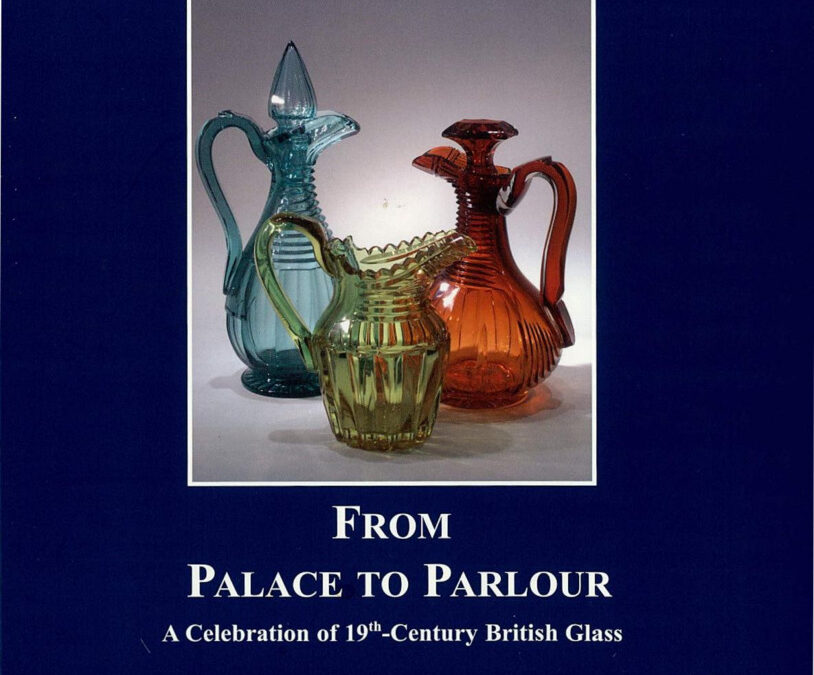
FROM PALACE TO PARLOUR
A Celebration of 19th-century British Glass
ed
,
z
,
-77E–s.
Ciii
tLi.
•
FROM PALACE TO PARLOUR.
A Celebration of 19th-century British Glass
Curated and written by Martine S. Newby
© The Glass Circle
ISBN 0953070303
Printed by Balding + Mansell Ltd
Norwich, England
FROM PALACE TO
PARLOUR
A Celebration of 19
th
-century
British Glass
he
Glass
ircle
An exhibition at The Wallace Collection, London
Presented by The Glass Circle
August 21 — October 26 2003
Supported by
MALLETT
..1ark77/12eft
Sotheby’s
President
Chairman
Hugh Tait
Simon Cottle
Honorary Vice-Presidents
Committee
Paul Perrot, Dwight Lanmon
Henry Fox
and David Watts
Jo Marshall
Martine Newby
Honorary Secretary
John Smith
Marianne Scheer
Anne Towse
Graham Vivian
Honorary Treasurer
David Watts
Derek Woolston
Aims and Membership
The Glass Circle promotes the study, understanding, and appreciation of historic, artistic and
collectable glass in all its aspects for the benefit of both experts and beginners by means of
publications and by convivial meetings, lectures, outings and other events. Membership is open
to anyone interested in glass, including dealers and other professionals, at home and abroad.
The possession of a collection is not necessary although many members are keen collectors.
Activities
Regular meetings on a wide variety of topics, sometimes with speakers from abroad, are held
in London in October, November, December, February, March, April, May and June. The Glass
Circle’s long-established excellent relationship with the museums, major auction houses and
many dealers occasionally extends to private receptions or social events. The Circle also
produces a series of publications, regular and occasional, and possesses a Library in London
open without charge (but by appointment only) to members.
The Circle’s website,
www.glasscircle.org
lists the society’s activities, posts their newsletter and
offers links to many sites of glass interest.
Application for Membership
Further information and application Balms for membership can be obtained from the Hon.
Treasurer, Mr D.C. Woolston, 31 Pit
–
field Drive, Meopham, Kent DA13 OAY
INTRODUCTION
Characterised by the fast evolution of new techniques, glassmaking in the 19
1
century was both
innovative and artistically brilliant. In no previous century had so many rapid changes been seen
in the industry over so short a time. For British glass, the 19″
1
century began with amongst other
things the production of a fine luxurious, heavily decorated service of cut glass for George,
Prince of Wales by the Warrington firm of Perrin Geddes and Co. 1806-1808. It was an
individual commission of regal proportions, strongly emphasising the exclusivity of glass at that
time but made by anonymous glass workers. The century closed with the regular high-volume
mechanical production of machine-made glass in cut-glass and novel styles for the masses. It
culminated, too, in the emergence of the individual artist glass craftsman, in anticipation of
developments in the 20th century and perhaps partly in consequence to the new machine age.
Whilst, in the first quarter of the century, cut-glass was so dominant, glass for the luxury
market was also decorated in a variety of other ways such as the high-quality enamelling
produced for the retailer William Collins and the blue-tinted glass from Bristol gilt with coats-
of-arms and Greek-inspired ornament by Isaac Jacobs. On the other hand, glasshouses –
especially in the north and west of England – were also involved in the manufacture of hand-
made, highly decorative but lesser quality glassware for a cheaper market. This included the
production of cottage wares, flasks, bottles and commemoratives in a limited range of colours.
Through its softness, reflective brilliance and especially density, lead crystal glass
provided a wonderful surface for cutting, allowing for the creation of a range of styles that
influenced and dominated the first half of the 19th century. Up to the end of the 18
1
century glass
was generally decorated either on foot or, occasionally, water-driven lathes. When more
powerful steam-driven lathes were introduced to the industry in the early 19th century, the cutting
art was revolutionised. This process enabled the glass-cutter to control the revolutions of his
spinning cutting wheel more precisely, thereby creating more elaborate and deeply-cut
decoration. The application of cut decoration enabled glassmakers to produce matching suites of
glass and a wider selection of useful table and sideboard vessels.
For their general forms the glassmakers were inspired by the fashionable Greek styles
adopted by the London silversmiths. Bolder, more pompous and especially large antique shapes
were copied and reproduced in various sizes. Initially limited to a variety of styles of diamond
shapes and prismatic or step-cutting together with stars, the craftsmen soon developed finer
methods of cutting fans, crowns, stylised leaves and feathers as they became accustomed to
using their new faster equipment, consequently producing an enormous decorative output over
a shorter period of time.
The sharp cutting styles evolved into panels of pillar and broad flutes so that by the 1840s
for the best English glassware, thicker and heavier glass was used. This was deeply cut in bold
5
but largely uncomplicated designs. At this time, too, there emerged in Bohemia a range of
striking new colours and decorating techniques that were strongly to influence glassmakers all
over Europe but especially in England. Utilising various metallic oxides including uranium,
glassmakers created ruby, amber and yellow-tinted, encased or stained glass, which might be
further embellished with engraved or cut decoration.
The removal of the excise tax on British glass in 1845, exactly a century after its
introduction, helped to stimulate the industry by opening it up to the development of new
manufacturing processes inspired by contemporary French and Bohemian glassware, especially
those combining the new colour ranges. Thus, much English coloured glass was made in the late
1840s or 1850s. This was combined with a wider use of skilled decorators for enamelled and
engraved tableware. Perhaps the most striking examples are those naturalistic water jugs and
goblets, from the Wordsley glasshouse of W.H., B. & J. Richardson, near Stourbridge. Intended
for the dining table, these pieces were painted with water lilies or bulrushes in accordance with
a contemporary theory that decoration should be in sympathy with the function of the object.
In spite of these developments, however, cutting styles remained the hallmark of quality for
British glass and the introduction of bolder pieces by the end of the 1840s marked the beginning
of an era of confidence and evident consumption. A powerful middle class was emerging with
tastes developed from and influenced by luxury glass of the preceding decades. From the mid
1850s, engraving also became more commonplace and a characteristic of luxury glassware.
Many of the best engravers for the luxury market seem to have been independent of the
glasshouses and worked on a commission basis. Inspired by the growing desire for dessert
services and tableware to match porcelain, routine factory engraving in the 1840s and 50s
consisted of stylised floral or fruit motifs and simple ornamental designs such as the Greek key
pattern.
The emerging international exhibitions, of which The Great Exhibition of All Nations in
London in 1851 is perhaps the most famous and influential, provided a conduit of ideas and a
stimulus for all the decorative art industries. The Birmingham firm of F. & C. Osiers was known
especially for several large commissions, including the enormous crystal fountain that was the
centrepiece of the exhibition arena. The firm went on to produce lighting and furniture made
entirely of glass for export to all parts of the British Empire, especially India, where monumental
pieces were made for the palaces of Maharajas.
Several items of classical shape and decoration appeared amongst the English cut-glass
forms in the exhibition marking the beginnings of a Neo-classical and Renaissance revival.
Applied to vases, ewers, decanters and goblets, these styles were especially in evidence at the
London Exhibition of 1862 and were equalled by engraving of the best quality. Many of the
figurative designs were taken directly from early Greek vases and the Elgin Marbles at the
British Museum. Formal patterns, such as stiff-leaves, fretwork, floral festoons, palmettes and
the Vitruvian scroll were also added to the engravers’ repertoire whilst fanciful Renaissance
motifs such as masks and grotesques were popular.
Were it not for the emigration to Britain of the 1850s by a number of highly-skilled
Bohemian engravers, classical engraving might never have thrived. The popularity of cut glass
had created few opportunities for engravers but with the diminishing interest in cut styles the
6
engraving techniques rose in importance. Engravers, such as Paul Oppitz (1827-1894), settled
mostly in London where they worked for a variety of retailers on shapes supplied by Midlands’
manufacturers. The stunning claret jug engraved with Renaissance motifs by Oppitz for W.T.
Copeland & Sons of London was exhibited in Vienna in 1873.
Acid-etching was perhaps the most notable new decorating technique to be introduced in
the post-1851 era. Using acid-resistant wax on the surface of the glass, designs were drawn with
a sharp point either freehand or by the use of templates. The glass was then dipped in
hydrofluoric acid, which ate into the areas where the wax was removed, and the edges completed
with copper-wheel engraving. It was soon discovered that the acid could be used for creating
matt surfaces dispensing with the need for the copper-wheel. Based near Stourbridge, John
Northwood (1836-1902) is credited with making this technique a commercial success. For
outlining figures and ornament, Northwood developed a template machine in 1861. This was
followed in 1865 by the introduction of a geometric etching machine to create formal linear
decoration of a more complicated nature.
Whilst by 1880 the fashion for sharp cutting had been almost abandoned in Britain, a
revival of heavy cut glass occurred in America perhaps resulting from the older styles shown at
the Philadelphia Centennial Exhibition of 1876. The American style spread to Europe in the
following decade. Known as ‘brilliant cutting’, it involved covering an entire piece of glass with
deep, prismatic cutting, stars and/or hobnail diamonds. The application of the curved mitre
emphasised the richly cut effect, which due to its extensive and bold appearance, came to
influence the styles of the pressed-glass manufacturers of America and northern England.
Engraved or enamelled oriental birds, foliage and blossom initially appeared on glass in
the late 1860s as the arts of Japan were seen by glass manufacturers as a stimulating new source
of decorative motifs. Gradually, however, direct copying was laid aside as more imaginative
oriental-inspired European styles emerged. One such style is the novel technique of ivory cameo
patented by Thomas Webb of Stourbridge in 1887 in which the decorating techniques of acid-
etching, engraving, staining, enamelling and gilding were often combined. In press-moulding,
Sowerby’s created a cream-coloured glass entitled ‘Queens Ivory ware’ which resembled both
ivory and cream-coloured earthenware. It was used for imitating both neo-classical designs
based on Wedgwood’s pottery of the 18th century and the Japanese styles of the late 19th century.
The creation of a new style of engraving applied to a form of glass made in imitation of
natural rock crystal was perhaps the most original and interesting response to the influence of
the East. It has its origins in the assimilation of Bohemian engravers into the British glass
industry. Inspired by the oriental carving of natural rock crystal and jade, especially, the style
drew heavily on the 17th-century Bohemian techniques of imitation rock crystal. As with the
earlier techniques, in ‘rock crystal’ the decoration was deeply engraved and then polished so that
it blended in tone with the glass surface.
The leading exponents of the style in England were Thomas Webb and Stevens and
Williams, where immigrant Bohemian artists, outstanding amongst whom were Frederick Kny,
William Fritsche and Joseph Keller, executed the finest work. They chose chrysanthemums,
trailing fruit blossom, exotic birds, dragons, rococo scrollwork and Indian pine motifs for their
ornamentation. It reached its zenith in the 1880s after which there was a cooling of demand for
7
all types of luxury glass in the following decades.
During the 19′ century, with the notable exception of press-moulding, the fundamental
methods of producing decorative glass and tableware were little changed. Decorative techniques
were refined but until the advent of the machine age there were very few new innovations.
Mould-blown glassware, re-introduced in Britian by Charles Chubsee in 1800-01 was in turn
exported to the United States by the British glassmaker Thomas Cains in 1812. The expediency
of multi-part moulded glassware was quickly recognised in America where it inspired the
development of mechanical press-moulding, the first major break with tradition and which
facilitated mass-produced glassware. The mechanical process adopted in the 1830s involved a
measured amount of molten glass poured into a predecorated brass or iron mould and pressed
against its sides with a metal plunger. In consequence, through lower production costs, glass was
gradually brought within the availability of an entire class of people for whom it had been a
luxury product.
Inevitably, most early pressed glass was made to imitate cut-glass patterns. It was not,
however, until the 1860s and 1870s that more unusual figurative styles were developed and
decoration appeared which could not be easily or cheaply reproduced in the handmade
production. Many of the styles were inspired by pottery and silver, for example, and in England
the industry was led by Sowerby’s, Davidson’s and Greener’s in the north-east of England and
John Derbyshire and Molineaux and Webb in Manchester.
Paperweights, posy vases, souvenir plates commemorating many military, political and
royal events, most notably Queen Victoria’s Golden and Diamond jubilees of 1887 and 1897,
became commonplace. Described by one commentator as ‘Art for the million’, the new colours,
styles and range of products were to revolutionise this traditional industry.
Influenced heavily by the ceramics industry and the new developments in press-moulding,
more emphasis was placed by the traditional manufacturers of hand-blown glass on new ways
of using colour and applied decoration. As a fon
–
n of ornament, molten glass had been applied
to vessels since the discovery of glassmaking, but rarely has this decorating technique been more
popular than it was in the last quarter of the 19th century, particularly in Stourbridge. Novelty was
all-important as the elaborate creation of
Matsu-no-Ice
glass registered by Stevens and Williams
in 1884 attests. As soon as one firm introduced a new idea the rest quickly seized it upon.
Ornamental shaded effects such as ‘Peach Blow’, `Amberina’, ‘Pomona’ and ‘Burmese’ were
made by a variety of glasshouses on both sides of the Atlantic and, in turn, imitated styles in
porcelain, especially those products of the Worcester factories.
With the emergence of artist-craftsmen in the second half of the 19th century a new spirit
evolved in glass manufacture. One of the new influential developments was the revival of
Roman cameo glass. A form of relief-carved cased glass, the Portland vase is the most important
surviving Roman example, depicting white figures on a dark blue background. After much
experimentation, John Northwood successfully recreated the cameo technique in Stourbridge.
Northwood’s copy of the Portland Vase was made by the initial creation of a thick open cup
shape of molten white glass into which a gather of blue glass was dropped. The whole ensemble
was then rolled on a marver and the resulting ball of glass blown into the required shape. It took
Northwood three years to carve, using a combination of acid, wheel-engraving and hand-tools.
8
The achievement greatly influenced other Stourbridge glasshouses and soon classically
inspired cameo glass became an established part of their production. The firm of Hodgetts,
Richardson and Co., for example, brought Alphonse Lechevrel (b. 1850) from France. A
medallist and gem engraver, Lechevrel completed several cameo vases with classical mythology
scenes during a two-year stay between 1877 and 1878, which were exhibited at the Paris
Exposition of that year. Of all the cameo sculptors, George Woodall (1850-1925) was the most
talented. After joining Thomas Webb & Sons in 1874 as an engraver, from 1880 Woodall
continued the classical figurative tradition as an unrivalled cameo artist. Drawing on the works
of earlier neo-classical artists for some examples, Greek, Roman and Chinese ornament was the
inspiration for his more unusual eclectic pieces.
The demand for cameo glass was so intense by the early 1880s that the Stourbridge firms
were compelled to develop a new cheaper type, known as ‘commercial cameo’. Manufactured
on a wide scale, particularly for the American market, but still of exceptional quality, the outer
casing was made thinner so that the removal of the surplus white glass by acid took less time.
The emergence in the second half of the century of influential designers such as
Christopher Dresser and Walter Crane, working in metal, ceramics, textiles, furniture and glass,
took the decorative arts in new directions but inspired both the handmade and machine-produced
product for both luxury and general markets. In London, the Whitefriars Glasshouse under
James Powell created novel hand-blown designs but also took their inspiration from the earlier
centuries, especially from Roman glass.
By 1900 glass had become a staple material in homes around the British Isles. In all its
forms it has a quality to impress. Whether plain or decorated, simple or complex, the hero is
often the glassmaker who, unlike the designer and decorator, remains anonymous and yet
through their abilities transformed the manufacture of glass over 100 years. Their work was to
be seen both in Palaces and parlours.
Simon Cottle
Chaiii
–
ran of The Glass Circle
July 2003
9
1
1. Six elaborately cut glasses from the service made
by Perrin Geddes & Co. for George IV when Prince
of Wales, including a wineglass cooler, two decanters
and three sizes of wineglass (port, white wine and
claret), each piece engraved with the Prince’s crest.
Warrington,
circa
1806-1808
Heights: cooler 10.1 cm; port glass 14 cm; large
decanter 32.95 cm
Lent by Her Majesty The Queen
Literature: Gray and Gray 1987; Hajdamach 1991, 39-
41
While visiting Liverpool in 1806 the Prince of Wales
attended a lavish dinner hosted by the city corporation.
For this special occasion the Liverpool Corporation
commissioned the Warrington firm of Perrin Geddes
& Co. to make a cut glass service engraved with the
city’s crest. The Prince was so impressed by this set
that he asked ‘the Mayor to order him a few dozen
Glasses of the same sort’ engraved with his own crest.
The Liverpool Corporation duly directed a second
service to be made and presented to the Prince of
Wales, without fully realizing how expensive this
would turn out to be. The original order of 198 pieces
comprised a dozen decanters, three dozen coolers, half
a dozen carafes or water jugs and six dozen each of
claret and port glasses. This, however, was deemed not
large enough for the Prince and an order for a further
12 decanters, 48 wine and claret glasses and 36 goblets
was placed with the firm in 1808, bringing the total
number of pieces up to 342 at a staggering cost of
£1,306.18s (Gray and Gray 1987).
Today, 136 pieces have survived in the Royal
Collection (41 claret glasses, 21 wineglasses, 13 port
glasses, 14 coolers, 25 small decanters, 17 medium-
sized decanters and 5 large decanters, but apparently
no goblets). The two decanters shown here are
examples of the small and large sizes.
1
0
2
3
4
2.
Apsley Pellatt candlestick with sulphide inclusion
bust of Princess Charlotte
facing right, the flattened
ovoid body cut with strawberry diamonds on a star-cut
stepped foot with scalloped rim, the sconce with
turnover pillar-cut rim alternatively hatched and plain.
London,
circa 1819-1820
Height 23 cm; Rim diameter 10 cm
Provenance: Jokelson Collection, no. 294
Literature: Dunlop 1991, 86, no. 294 (identified
erroneously as a sulphide bust of Queen Victoria)
Apsley
Peliatt
took out his patent for ‘cameo
incrustation’ in 1819 so this piece was made several
years after the tragic loss in childbirth of Princess
Charlotte (1796-1817), the daughter of George IV and
wife of Leopold (later King of Belgium).
3.
Regency eight-sided cut glass dish,
the rim
decorated with ten upright Prince of Wales’ feathers
and hatched swags, the sides with a band of diamonds
above step cutting and flat flutes, the base star cut.
First quarter of the 19th century
Height 7 cm; Length 25.5 cm; Width 19 cm
For a similar bowl cut with ten crowns in Broadfield
House Glass Museum see Hajdamach 1991, 43, pl. 25.
4.
Set of four cut glasses each engraved with initials
‘J-A•M’, the
flared bucket bowls rising from a pincered
and cut flammiform base on eight-sided fluted stems
with raised diamond band knop terminating on a star-
cut foot with eight points.
London,
circa
1830-1840
Heights: 13.5, two x 14.0 and 15.0 cm
Rim diameters: 6.0, two x 7.5 and 9.5 cm
Although very similar to the wineglasses from The
Prince of Wales service (cat. no. 1), drawings in the
Victoria and Albert Museum show that this set was
made in London by Blades and Jones for J.A.
Mandezabal (Coutts 1984, 24, fig. 9). Identical designs,
dating to 1906, also appear in the pattern books of
Thomas Webb & Sons (Hajdamach 1991, 41).
11
5
6
5.
Pair of wheel-cut and partly acid-etched
decanters and stoppers,
with the arms of George IV,
when The Prince Regent between 1810 and 1816.
Circa
1810-1816
6.
Thomas Hawkes gilt and enamelled footed vase,
the double-walled bowl with enamelled, gilt and cut
decoration on the outer surface of the inner bowl and
inner surface of the outer.
Dudley,
circa
1837
Height 11.8 cm; Rim diameter 15.3 cm
Broadfield House Glass Museum, Kingswinford, inv.
no. BH.3330
7.
Thomas Hawkes reversed decorated gilt and
enamelled plate with the arms of Queen Victoria
on
a green ground within a gilt border of fruiting vine,
roses and leaf scroll on a burgundy and pink ground.
Dudley,
circa
1837
Diameter 18.3 cm
12
8
In 1837 the Dudley Flint Glass Works of Thomas
Hawkes was commissioned to make a ‘splendid gold
enamel dessert service’ for the first banquet attended
by Queen Victoria at the Guildhall on 9th November
1837 after her accession to the throne. This piece and
another plate in the Victoria and Albert Museum that
bears the Royal Coat of Arms within a garter star and
set against a red enamelled background, probably
belong to this service (Morris 1978, 62, pl. 37 on fig.
65; Wakefield 1982, 60, col. pl. A).
8. Uranium ‘topaz’ cut glass forger bowl and clear
glass ice plate engraved
in the centre with the royal
cipher and the initials
va
(for Queen Victoria) and on
the rim with a border of roses and leaves, the bowl
engraved around the rim with a border of roses, thistles
and shamrocks and the arms of the City of London.
London,
circa
1837
Height (bowl) 9.5 cm; Diameter (plate) 19 cm
Broadfield House Glass Museum, Kingswinford
(Michael and Peggy Parkington Bequest), inv. no.
BH.2942.a+b
Literature: Hajdamach 1991, 57, col. pI. 4; Evans,
Ross and Werner 1995, 19; Brown 1997, 85, pl. 2 on
p. 84; Sketcher 2001, 46, pl. 14
Both pieces come from a set of 12 made by the
London glassmakers James Powell and Sons for the
same banquet as the Hawkes gold enamel plates (cat.
no. 7). Most of the ceramics and glass for the royal and
other tables at this banquet were supplied through the
Staffordshire firm of Davenport’s who had only one
month to bring together the 6,150 pieces of glass used.
9. Duke of Sussex cut glass toddy-lifter
with a fluted
neck with three facetted collars, the slender club-
shaped form facet-cut and engraved in the middle of
the body with the initial ‘s’ inside the Royal Garter
below a ducal coronet (for Augustus Frederick, Duke
of Sussex, 1773-1843).
Circa
1810
Height 21.5 cm
Victoria and Albert Museum, London (Wilfred
Buckley Gift), inv. no. C.651-1936
13
10
10.
Tall Regency cut glass vase enamelled with ‘The
Arts’ and inscribed ‘Patent Enamel’, attributed to
William Collins,
the ovoid body cut with panels of
diamond and step cutting, on a footed base.
London,
circa
1820-1830
Height 31 cm
This vase comes from a garniture comprising four
small and two larger vases enamelled with ‘The
Elements’ and ‘The Arts and Sciences’ from the
collection of the Duke of Sussex, son of George III.
They were probably supplied by William Collins of
227 The Strand, London, together with the small
goblet that bears the Duke’s arms (cat. no. 11). In 1822
Collins described himself as ‘Glass Manufacturer to
His Majesty and their Royal Highnesses the Duke of
Sussex and Princess Elizabeth’ and later as ‘Glass
enameller, lamp manufacturer to the Queen and the
Royal Family’.
11.
Cut and enamelled glass goblet attributed to
William Collins,
the large bucket-shaped bowl with a
rectangular panel painted in translucent polychrome
enamels with the arms of the Duke of Sussex, set on a
short bladed stem and radial-cut foot.
London,
circa
1820-1830
Height 15.5 cm
Victoria and Albert Museum London, inv. no. C.106-
1998
Provenance: The Royal Brierley Collection of English
Glass (Sotheby’s 1998, lot 123, the glass attributed to
`possibly Davenport’ and the armorial to George
III
or
George IV)
12.
Three carafes and four large goblets from a cut
and enamelled service attributed to William
Collins
and decorated in transparent enamels, the
carafes with seated women in classical dress beside
roundels depicting the signs of the zodiac: Aquarius
(male pouring water from an amphora), Taurus (bull)
and Libra (lady holding a set of scales); the four
bucket-bowled goblets with labelled depictions of
Roman gods and heroes: Jupiter wearing horns, the
Trojan hero Aeneas wearing a helmet, Venus and
Vesta.
London,
circa
1820-1830
Heights: goblets
14.5
cm; carafes 18.5 cm
Powell Cotton Museum, Birchington-on-Sea, inv. no.
G/C 31-33 (decanters); G/C 41-44 (goblets)
14
12
Cjill a
Jr r I
–
4.e:
13.
Small
enamelled cut glass goblet attributed to
William Collins with a wide gilded band below the
rim painted with laurel leaves and berries and with a
labelled bearded bust of
the Greek god Prometheus.
London,
circa
1820-1830
Height 11.8 cm
11
13
15
14
14. Double-lipped cut glass finger bowl from the
Londonderry Service,
the scalloped vertical rim with
broad fluting below, the body cut with two opposing
panels of raised diamonds, a panel of strawberry cut
diamonds and on the front with the engraved arms of
the Marquis of Londonderry, the base star-cut within a
square and surrounded by hatching.
Sunderland, 1824
Height 11.0 cm; Max. width across rim 16.6 cm
The 200-piece Londonderry Service made for the
Marquis of Londonderry comprised a dessert suite and
a separate wine service. It took several years to make
and was valued at over 2,000 guineas. It was much
more extensive in its range of forms than the Prince of
Wales service (cat. no. 1) and included decanters,
claret and water jugs, goblets, tumblers, finger bowls
(illustrated here), ice buckets, jars for honey and butter,
almond dishes, plates and bowls.
15
15.
Geddes diamond cut and fluted square glass
scent bottle
engraved within a panel with crest of the
Geddes family of Scotland (a pike’s head) above the
initial ‘G’ and the motto ‘CAPTO MAJORA’.
Early 19″ century
Height 10 cm
16.
Heavily cut glass hookah base of bell form,
the
neck and lower body with step cutting above vertical
fluting, the shoulder with diamond cut panels and the
base star cut.
Circa
1820
Height 25.3 cm; Base diameter 22.3 cm
16
16
17
17
18
19
17.
Cut apple-green glass claret jug and stopper
with step cutting to the
neck and upper body, the lower
body with wide flat flutes, the underside of the footed
base star cut; the cut handle with thumb rest; spire
stopper with vertical flat cutting.
Circa
1820-1830
Height (including stopper) 29.3 cm
18.
Yellow coloured cut glass water jug
with
scalloped rim and step cutting under spout and on short
neck, flat flutes on shoulder and pillar-cutting on the
body, star cut base; applied plain handle with cut
thumb rest.
Circa
1820-1840
Height 17
cm
19.
Claret jug and hexagonal stopper of red glass
cased in colourless, the rim with a serrated edge and
cut bands underneath, step cut neck and body with cut
spits between flat flutes, the underside of the base star
cut; cut handle with thumb piece.
Circa
1830
Height
(including stopper) 23 cm
Literature: Battie and Cottle 1991, illus. on p. 102
20.
Isaac Jacobs gilded ‘Bristol’ blue glass plate
with
a Greek key border, the recessed centre with the
stag’s head crest of the Earls of Verulam.
Bristol,
circa
1805-1810
Diameter 18.5 cm
Marks: signed underneath in gilt,
‘I. Jacobs /Bristol’
In 1806 Jacobs advertised in
Felix Farley Bristol
Journal
‘coats of arms, crests and ciphers done upon
(dessert sets) in the greatest style, by some of the finest
artists in the kingdom’ (Witt, Weeden and Schwind
1984, 12, pl. 22).
18
20
19
21
22
23
24
21.
Cut glass water jug with a turned-in and
flattened rim, the
shoulder with step cutting, the main
body with large strawberry cut diamonds and the
underside of the base star-cut; square cut handle.
Circa
1825
Height 14.5 cm; Rim diameter 10 cm
22.
Double-handled and double-lipped cut glass
cream
jug,
the upper
body with horizontal step cutting
and the lower with raised diamond cutting flanked by
vertical fluting, the underside of the base star-cut.
Circa
1820-1830
Height 19.5 cm
Provenance: Benacre Hall, Suffolk
A similar double-handled and double-lipped sauce-
boat was included in the Glass Circle’s 1987
exhibition,
Strange and Rare
(41, no. 142, illus.).
23.
Regency large two-piece cut glass bowl and
stand
with multi fan-cut rim above strawberry cut
diamonds filling the pattern generated by intersecting
double mitres; step cut stem terminating on a domed
foot cut to match the bowl.
Circa
1820-1840
Height 20.5 cm; Rim diameter 27.5 cm
For a similar two-piece bowl cf. Warren 1970, pl.
92a,b
24.
Regency cut covered butter cooler on a stand,
the circular bowl with an upright serrated rim above
panelled step cutting; the dish with radial cutting on
the upper surface and with step and star cutting
underneath; the domed cover similarly decorated with
step cutting and a star cut button knop, the underside
with radial flutes.
Circa
1810-1820
Height (total) 14.2 cm
20
25
26
27
25.
Large helmet-shaped cut glass jug
with deep
moulded vertical ribbing on a short capstan stem and
scalloped foot.
Circa
1825-1840
Height 25.3 cm
26.
Large pillar-cut claret jug and stopper
with a
scalloped rim, step cutting on lip, the neck with
horizontal pillar cutting and body with vertical pillars,
the under side of the base star cut; flat flute cut handle
with vestigial thumb rest; the flat topped stopper with
six cut concave flutes.
Circa
1820-1840
Height 30.5 cm
27.
Water jug of baluster form with twisted deep
moulded ribbing
with scalloped rim, star-cut base and
plain cut handle.
Circa 1825-1840
Height 26 cm
Two decanters with similar deep but vertical rib-
moulding were in the Michael Parkington Collection
(Christie’s 1998, lots 161 and 164).
21
28
29
28. Set of four Richardson Patent graduated liquid
measures with cut flutes on the neck and body,
marked respectively in ascending order,
1/4 Gill / Richardson’s Patent Y18
1/2 Gill / Richardson’s Patent X489
1
Gill / Richardson’s Patent X942
1/2 Pint / Richardson’s Patent X273.
Each decanter with a wheel-engraved line on the neck
and a stamped metal seal with the motif for the city of
Glasgow (tree with a bird on top, a bell hanging from a
branch and a salmon with a ring in its mouth) inserted
through a drilled hole placed on this line and fixed by
solder.
Glasgow, after 1870
Heights: 10 cm, 12 cm, 14 cm and 17 cm
Rim diameters: 3.5 cm, 4 cm,
4.5
cm and 5.5 cm
On 31′ December 1869 William Haden Richardson of
the Stourbridge glass-making family and manager of
the Glasgow firm of James Couper and Sons, took out
a patent for the invention of ‘a new method of
indicating stamping with the standard mark or
otherwise crystal or glass measures for containing
spirits, beer and other liquids’ (Brooks 2000, 20). The
metal insert was stamped by an inspector from the
Board of Trade with a crown, letters of the monarch
and a number indicating the city where it was stamped
or, as on these examples, with the device for the city.
29. W.H., B. & J. Richardson’s hollow-stemmed
tazza
in clear and beige glass with vermicelli
decoration on the bowl.
Stourbridge,
circa
1854
Height 13 cm; Rim diameter 14 cm
This type of vermicular, or vermicelli pattern was
registered by Richardson’s on 24th August 1854,
number 96703, on a jug with trefoil mouth (Hajdamach
1991, 113, pl. 85). It was a very time-consuming
process as all the pattern marks are hand-worked,
which was allegedly carried out only by girls with the
right temperament.
22
30
30. W.H., B. & J. Richardson’s vitrified enamelled
opaline vase
of baluster form, the flaring rim outlined
in gilt, a gilt band of ears of corn around the middle of
the neck, the front decorated with a romantic view of
the ruins of Christchurch Abbey, signed in the lower
left corner ‘T. Fall’ above two crossed ears of corn in
gilt, the reverse with further ears of corn.
Stourbridge,
circa
1850
Height 22.6 cm; Rim diameter 10.0 cm
Marks: signed in black on the underneath of the base,
`Ruins of / Christchurch Abbey’
and `Richardson’s
Vitrified’
For another slightly smaller vase of the same form
decorated by T Fall with the Ruins of Christchurch
Abbey see Manley 1981, 58, no. 38.
31. W.H., B. & J. Richardson’s opaline vase transfer
printed in pale terracotta red
with the design from
one side of the Portland Vase on the front and the head
from the base disc of the Vase on the reverse, the rim
with a running design of fern leaves in black and frieze
of acanthus leaves on the shoulder.
Stourbridge,
circa
1845-1850
Height
14.7 cm
Marks: I’ / 361′ in black on the underside of the base
Literature: Morris 1978, pl. 80
The design for this piece appears
on a page from a
Richardson design book with views of the Portland
Vase and other classical scenes (cf. Hajdamach 1991,
col. pl. 9 and p. 101). A drunken Irishman famously
smashed the Portland Vase, an iconic masterpiece of
ancient Roman cameo engraving, in the British
Museum in 1845. The Richardsons capitalized on this
event and produced transfer printed opaline vases of
baluster form, like this example, as well as in the squat
amphora form of the original Vase
(idem
1991, 99).
23
32
32.
George Bacchus & Sons shaft and globe
decanter
and stopper of ruby glass overlaid with
opaque white and spirally cut in diamonds, with
Vandyke star on base.
Birmingham,
circa
1850
Height 31.8 cm
An identical decanter in the Victoria and Albert
Museum, London, is illustrated in Morris 1978, pl. 17.
33.
Enamelled and gilded vase decorated and signed
by Jules Barbe,
the acid-etched ground is decorated
with gilding in relief and enamelled with garlands of
roses.
Stourbridge,
circa
1890
Height 25.4 cm
For the pair to this vase, also signed by Barbe, in
Broadfield House Glass Museum, see Hajdamach
1991, col. pl. 42 on p. 324.
Family history states that Jules Barbe was born in Paris
33
Siege of Paris. Working in Stourbridge from 1879 he
became the foremost exponent in this field of
decoration in England.
A journalist writing in 1905 described the laborious
process Barbe used to produce such brilliant gilding,
`All designs are sketched by M. Jules Barbe himself.
The gold which, in its dissolved state, looks a brownish
paste is put on according to the design by means of
brushes, which in the case of painting monograms,
consist sometimes of but a few hairs. The painted
glasses are then “fired” in specially constructed muffles
[ovens]. After having received two, three or sometimes
four firings, they are taken out and burnished, in order
24
34
35
36
brushes made of spun glass, and afterwards with agate,
and bloodstone. The gold which after burning had a
dull appearance acquires a wonderful brilliancy. As
most of the monograms, crests, coats of arms, and
flower decorations are done in raised gold, the results
are such as should be seen to be appreciated in all their
beauty. Whilst the effect of gold painting are simple and
dignified, those secured by enamelling have all the
richness of a great painting.’
34. Small Thomas Webb & Son opalescent vase
overlaid in red
with a flaring funnel mouth, the squat
bulbous body decorated in raised silver and gilt with
flowering leaves in the workshop of Jules Barbe.
Stourbridge, 1880s
Height 12.0 cm; Rim diameter 6.8 cm
35.
Thomas Webb & Sons two-handled spherical
vase in
opalescent glass overlaid in deep blue glass and
decorated in the workshop of Jules Barbe with raised
gilt decoration of prunus blossom and a butterfly.
Stourbridge, 1880s
Height 12 cm; Width (across handles)
11
cm
36.
Small Thomas Webb & Sons Peach Blow vase of
cream-coloured glass overlaid with red glass that
gradually becomes paler and less opaque as it descends
the body which was gilded with flowering branches
and insects in the workshop of Jules Barbe and covered
by applied clear glass leaves and raspberry prunts; the
foot gilded around the edge.
Stourbridge, 1880s
Height 11.3 cm; Rim diameter 6.4 cm
25
37
38
37. W.H, B. & J. Richardson ‘vitrified enamelled’
oviform water jug and matching goblet,
enamelled
in natural shades of green, white and yellow with
bulrushes, the top of the goblet foot with a band of
stylized ivy leaves and berries.
Stourbridge,
circa
1848-1850
Heights: jug 20.4 cm; goblet 16.5 cm
Marks: printed in black
‘RICHARDSON’S VITRIFIED /
ENAMEL COLORS’
on the underside of the jug and trace
of another one on the base of the goblet
Bulrushes were also used as decoration on a water jug
and carafe designed by Richard Redgrave for Henry
Cole’s
`Summerly’s Art Manufactures’ and made by
J.F. Christy, Lambeth. They are both marked with kite
marks for 1847 and the firm’s initials in monogram
(Morris 1978, pl. 35 for the former and Liefkes 1997,
fig. 154 right, for the latter).
38. W.H., B. & J. Richardson’s clear glass oviform
water jug, carafe and two goblets,
enamelled in
natural shades of green, white and yellow with water-
lilies and leaves.
Stourbridge,
circa
1848-1850
Heights: jug 23.5 cm; carafe 24.8 cm; goblets 16.8 cm
Marks: printed registration marks for 13th June 1850
printed in red on the underside of one goblet and in
black on the jug.
Literature: for the carafe cf. Morris 1978, col. pl. I.
A water jug painted with a similar design in the Victoria
and Albert Museum bears the Richardson mark and a
diamond registration mark for 1848 (Morris 1978, pl.
32; Liefkes 1997, fig. 154 left).
26
39
40
39. W.H., B. & J. Richardson’s white opaline goblet
transfer-printed in black with a vignette of a Middle
Eastern oasis with two camels, the top of the foot with
a band of fruiting vine.
Stourbridge,
circa
1850
Height 16.5 cm
Marks: same printed mark on the underside of the foot
as for no. 37
40. W.H., B. &
J.
Richardson’s white opaline
oviform water jug and goblet,
transfer-printed in
black with vignettes of Middle Eastern water sellers.
Stourbridge,
circa
1846-1849
Heights: jug 24.5 cm; goblet 16.5 cm
Marks: printed registration mark for 16th April 1846 in
black above ‘385 / P’ on the underside of the jug
27
41
42
43
41.
James Powell & Son (Whitefriars) straw opal
wineglass designed by T.G. Jackson,
with a plain
lobed bowl on a ‘tulip’ stern and plain foot.
London, after 1877
Height 12.5 cm; Rim diameter 5.8 cm
42.
James Powell & Sons (Whitefriars) dark green
jug probably designed by Harry Powell,
of
shouldered tapering cylindrical form with a cylindrical
neck and angled handle.
London,
1870s
Height 26.2 cm; Rim diameter 6 cm
A jug of identical form but with four bands of applied
trailing appears in a 40-page catalogue produced in the
1870s (Evans, Ross and Werner 1995, pl. 379 on p.
262).
43.
Two James Powell & Son (Whitefriars) Venetian
inspired wineglasses. The
first in Alsatian blue glass
with ribbed bowl and spiral bubble decoration on an
air-twist tapering stem and lightly ribbed foot. The
second in emerald green glass with an everted rim, the
U-shaped bowl on a merese and hollow lobed stem
with a small prunt to each lobe, over a ribbed foot.
London, 1880s
Heights: 16.5 cm and 13.7 cm
Rim diameters: 7.9 cm and 7.2 cm
Literature: both pieces illustrated in
The Art Journal
1888 and reproduced in Jackson 1996, 15, fig. 30.
28
44
44. James Powell & Sons (Whitefriars) ribbed
straw-opal two-handled footed urn and cover
decorated with applied raspberry prunts and engraved
on the front,
`FAC-SIMILE OF VASE BORNE BY
G. MANNERS
ESQ. F.S.A. F.L.S. ON THE OCCASION OF
H.R.H. THE PRINCE OF WALEs KG. LAYING
THE MEMORIAL STONE OF THE
TOWER BRIDGE ON BEHALF
OF HER MAJESTY THE QUEEN
ON THE 21′
1
JUNE 1886′
London, 1886
Height (including cover)
31
cm; Rim diameter 12.5 cm
Literature: Evans, Ross and Werner 1995, 65, fig. 61 on
p. 63
George Manners, who was a member of the London
Corporation, presented the original urn and documents
to the Prince of Wales before they were placed in a
cavity below the foundation stone of Tower Bridge.
Afterwards he was given this replica. Similar time
capsules were made for other Corporation projects.
45
45. James Powell & Sons (Whitefriars) colourless
hemispherical decanter and silver-mounted collar
stopper holding a netsuke,
the neck banded with two
rings of vermicular type rings and four applied
raspberry prunts. The hallmarked silver mount
decorated with a narrow beaded band and surmounted
by a tourist quality Japanese netsuke of a seated man.
London,
circa
1898
Height (including stopper) 20.0 cm
Marks: the silver mounts London hallmarked, 1898, for
Thomas Alfred Slater, Walter Brindsley Slater and
Henry Arthur Holland of Holland, Aldwinckle & Slater
Literature: McConnell forthcoming
This decanter was probably part of a range designed by
Harry Powell of J. Powell’s Whitefriars Glassworks as
part
of an Arts & Crafts series for Liberty & Co.
29
47
46. James Powell & Sons (Whitefriars) tall ovoid
vase in a wrought-iron tripod stand designed by
Harry Powell
and made in straw-opal glass with a
raised `nipt diamond waies’ pattern.
London,
circa
1880s
Heights: vase 34.5 cm; including stand 40.5 cm
The Birkenhead Collection
Literature: Evans, Ross and Werner 1995, pl. 44 on p.
51
Iron and glass pieces designed by Harry Powell were
one of his specialities, the glassworks employing their
own blacksmith from 1879 (Evans, Ross and Werner
1995, 55, n.6). Vases like this were shown at the first
Arts and Crafts Exhibition in 1888.
47. John Walsh Walsh heat sensitive opaline glass
fan-shaped vase
with a wavy rim on a slender stem
and foot, decorated with a brocade pattern in white on
the delicately tinted body.
Birmingham, 1897
Height 40.5 cm; Width 32.0 cm
Literature: Reynolds 1999, pl. 6 and front cover illus.
Towards the end of the 19th century Walsh Walsh
became experts in the technique of manufacturing heat-
sensitive glass. The
Pottery Gazette
for November
1897 features an illustration of various vases using this
technique (reproduced by Reynolds 1999, fig. 17 on p.
13), commentating ‘the tall fan vase is a very delicate
ornament and shows the beauties of the new Opaline
Brocade perhaps better than any other piece.’
30
48
49
48. Christopher Dresser clear glass claret jug
with a
long cylindrical neck and short squat bulbous body, in
a silver-plated mount with tall angular handle.
London,
circa
1875
Height 22.5 cm
49. Christopher Dresser claret jug with pointed
ovoid body
in silver-plate tripod mount with stylized
`crows feet’, the cover with an engraved dolphin crest.
London,
circa
1875
Height 23.8 cm
The Birkenhead Collection
The Birkenhead Collection
Marks: the silver-plated mounts with the H&H mark
for Hukin and Heath of Birmingham and London
The feet to this claret jug were inspired by ancient
Egyptian footed vessels.
31
50
51
52
50
51
50.
John Derbyshire pair of press-moulded frosted
glass figures of Punch and Judy
on circular plinth
bases, both figures seated, Punch with a dog at his side
and Judy with a cat.
Manchester,
circa
1875
Height 15.8 cm; Base diameter 11.6
Mark: both pieces with a John Derbyshire trademark of
an anchor bisecting the initials m on the inside
These figures were produced in both clear and frosted
glass; for an example of the former in the Victoria and
Albert Museum see Slack 1987, 119, no. 90
51.
Pair of John Ford compotes,
the stems formed by
clear colourless moulded glass figures with abraded
surface of a fisher boy and a fisher girl with baskets on
their heads into which are screwed the original circular
bowls engraved with radiating stripes and a running
border of leaves.
Holyrood Glass Works, Edinburgh,
circa
1870-1875
Height 28.8 cm; Bowl diameters 22.5 cm
This pair of compotes is illustrated by line drawings in
an undated John Ford catalogue in the National Art
Library in the Victoria and Albert Museum
lithographed by Will. McFarlane, Edinburgh, each
captioned, `Frost’d & eng’d crystal comport 13/6′. The
two figures are probably based on photographs of
Newhaven fisher folk by Hill and Adamson.
52.
Clear press moulded figure of John Bull
attributed to John Derbyshire
seated cross-legged on
a bale of wool, with a dog, cudgel and copy of
The
Times,
on a raised circular base inscribed to the front
`JOHN BULL’.
Manchester,
circa
1875
Height 18.0 cm; Base diameter 9.3 cm
32
53
54
Although unmarked, the similarities between this piece
and the figures of Punch and Judy (cat. no. 50) would
suggest that it too was produced by John Derbyshire
(Lattimore 1979, 149, fig. 95).
John Bull epitomises all that was thought to be
typical of the British character: honest but quarrel-
some, his temper depending upon the weather, he
understood business and was fond of drinking and the
society of his friends.
53.
Mammoth lead-glass rummer,
the bucket-
shaped bowl with cut fluting to the lower part, engraved
below the rim with a basket of fruit and fruiting vine
and inscribed to the front,
‘TO / JOHN
scorn /
1851′, on
a hollow fluted waisted stem and plain foot.
Circa
I851
Height 23.5 cm; Rim diameter 15.5 cm
54. Coventry Canal Company decanter and
stopper,
the neck with four rings and cut petal fluting
that continues on the sloping shoulder, the body
engraved with a vignette of a Joey Boat being towed
along the canal by a horse, the initials `CCC’ decorated
with lock gates above, band of cut fluting to the lower
body.
Circa
1830
Height (including stopper) 16.8 cm
The Coventry Canal, which opened in 1790, was built
primarily to transport coal from the pits at Bedworth,
Coventry and Nuneaton to the rest of the Midlands and
beyond, the canal being an important link between the
northern and southern canal networks.
The Joey Boat depicted is a specifically local type
of barge used for transporting coal. They were double
ended so that the rudder could be hung on either end
and thereby avoid the need to turn the boat around. As
the distances involved were relatively short, most
journeys to and from the colliery could be completed in
a day, albeit very long ones.
33
55
55.
Lead-glass rummer wheel-engraved with a
beam engine, the initials ‘CT’ and a spray of flowering
thistles and roses on the rounded bucket-shaped bowl,
set on a fluted stem and star-cut base.
Circa
1820-1830.
Height 15.3 cm; Rim diameter 9.8 cm
The beam engine depicted is of a Boulton and Watt
type that was used mainly for pumping water out of
mines and iron works. This rummer probably
commemorates the installation of a new engine in such
an industrial installation.
56.
Rummer wheel-engraved with a view of the
Rotherhithe entrance to the Thames Tunnel, the
reverse with a panel inscribed,
‘THAMES TUNNEL / OPEN”
26
MARCH
1843 /
IS
1200
FEET LONG / AND COST
£446,000′, surmounted by flowering garland, a spray
56
of roses to the left and one of thistles to the right, the
lower part of the bowl with cut flutes, on a short stem
with facetted knop, star-cut base.
Circa
1843
Height 17.5 cm; Rim diameter 11.3 cm
Exhibited: Institute of Civil Engineers, London,
The
Miumphant Bore: A celebration of Marc Brunel:s
Thames Tunnel
(Crimes
et
al. 1993, 191a)
The Thames Tunnel, the first underwater thoroughfare
in the world, was built between 1825 and 1843. It was
a triumph of engineering by Marc Brunel, made
possible through his brilliant invention of the
tunnelling shield. It was opened to much acclaim in
1843 but was later sold in 1865 to a railway company
and is now part of the East London Line on the
London Underground.
34
57
57. Four pit disaster glasses (two wineglasses and
two moulded miniature tankards) with crudely-
engraved inscriptions from left to right,
`Better Luck / to the Durham Miners / 1894′;
`Robert Barr / Who lost his Life / Seghill Colliery /
1888’;
‘HARTLEY COLL / DISASTER /
204
LIVES LOST /
1862′;
`Burradon Col / Explosion / 76 Lives lost 11860’.
Heights: 5.5 — 10.0 cm
These cheap little glasses were sold to raise money for
the widows and children following various mining
disasters and individual losses, like that of Robert Barr,
a stoneman at the Seghill Colliery, who died on 10th
November 1888, aged 28, when a prop gave way
causing him to be crushed to death. The explosion at
the Burradon Colliery, Northumberland, on 2^d March
1860, was caused by the ignition of gas from a naked
light and deficient ventilation and resulted in the loss of
76 lives.
The greatest mining disaster in British history,
however, was that at the Harley Colliery on 16″ January
1862 when the giant beam of the pumping engine
snapped and 20 tons of cast-iron hurtled down
58
the only shaft, blocking all attempts to rescue the 204
miners trapped inside, most of whom succumbed to
gas. Ten years later the Coal Mines Act of 1872 stated
that no person should be employed in a mine unless
there were at least two shafts in communication with
each seam being worked to avoid a repeat of this
disaster.
58. W.H. Heppell clear mould-pressed glass coal
wagon ‘ornament’ or sugar basin with studded iron
banding and rings and four wheels acting as feet.
Newcastle Flint Glassworks, Newcastle,
circa
1880
Height 8.5 cm; Width across rim 13.0 cm
Marks: diamond registration mark on the inside of base
for 19’h June 1880.
Literature: Morris 1978, 201, fig. 135; Lattimore 1979,
107, fig. 68; Wakefield 1982, 58, pl. 90a
35
59
60
59. Large Sunderland Bridge glass rummer,
wheel-
engraved with views of the Bridge and the facade of the
Sunderland Exchange, both within rectangular panels
inscribed below respectively, ‘SUNDERLAND
BRIDGE’
and
‘THE EXCHANGE’,
on a moulded lemon-squeezer
foot.
Circa
1814
Height 20 cm; Rim diameter 14.3 cm
Built in 1796 at a cost of £32,000 and with a span of
236 feet, the Sunderland Bridge was then the largest
single span cast-iron in the world. The Exchange,
designed by Stokoe of Newcastle, was opened in 1814.
The Bridge was later rebuilt in 1858-1859.
60. Unmarked opaque white mould-pressed oval
lidded box of the Royal Albert Hall,
inscribed on
front of the base, ‘ROYAL
ALBERT HALL LONDON’.
Circa
1870s
Height 9.5 cm; Length 13.0 cm; Width 9.8 cm
Literature: Walker and Biss 2002, 148 (described as
opal glass)
Designed by Captain Francis Fowke of the Royal
Engineers in January 1865, the Royal Albert Hall was
formarly opened by Queen Victoria on 29th March 1871
in memory of Prince Albert. The 800 ft inscription
encircling the building outlines the Prince’s vision
following the success of the Great Exhibition
in
1851,
`This Hall was erected for the advancement of the Arts
and Sciences and Works of Industry of all nations in
fulfilment of the intention of Albert Prince Consort’.
36
61
62
61. Uranium yellow cut-glass crown scent-bottle
possibly by James Powell & Sons,
the removable
central bottle with a tapering body cut with vertical
fluting and a stopper with a cross-shaped finial, the four
sections of the openwork crown engraved with rose,
thistle, shamrock and lily-of-the-valley; the whole set
on a square white marble base.
London (?),
circa
1835-1840
Height (total) 15 cm; Base 8.2 cnf
–
62. Pale opalescent green press-moulded covered
jar in the form of a crown on a cushion,
the crown
section opening above ermined circlet to reveal a
hollow interior; the whole resting on a square cushion
decorated with a cording and tassel on each corner.
Circa
1865-1868
Height 10.0
cm; Base 9.5 cm’
Marks: large diamond
registration mark on the
underside of the base for 14th February 1865
This piece was possibly made as a souvenir to
commemorate the Silver Wedding Jubilee of Queen
Victoria and Prince Albert.
37
63
64
63
63. Henry Greener opaque white pressed-moulded
sugar basin and jug made to commemorate the
Congress of Berlin, 1878, the stemmed bowl with a
portrait of Disraeli in a laurel wreath and on the reverse
the inscription, `EARL / BEACONSFIELD / THE HERO OF
THE / CONGRESS / OF BERLIN /JULY 1878′, the sides with
florid roses, thistles and shamrocks; the helmet-shaped
jug with a similar portrait and flowers.
Wear Flint Glassworks, Sunderland,
circa
1878
Heights: bowl 14.2 cm; jug 11.5 cm
Rim diameter of bowl 13.8 cm
Marks: Greener trademark of a demi-rampant lion
balancing a star on one paw and diamond registration
mark for 31 August 1878 (no. 325547) on interiors
Literature: Morris 1978, 203, fig. 136; Lattimore 1979,
144, fig. 91; Slack 1987, 97, figs 71-2; Thompson
1989, 14; Walker and Biss 2002, 111
In July 1878 Benjamin Disraeli, Earl of Beaconsfield
(1804-1881) attended the Congress of Berlin where his
diplomatic skills were held to be responsible for ending
the Russo-Turkish War of 1877-1878.
64.
Sowerby & Co. mould-pressed Gladstone Bag-
shaped spill vase in purple malachite glass with one
handle and moulded straps
Ellison Glass Works, Gateshead-on-Tyne,
circa
1877
Height 8.2 cm; Length 9.5 cm; Width 4.0 cm
Marks: on the underside of the base the Sowerby
peacock’s head trademark and diamond registration
mark for 18th September 1877 (no. 314283)
Literature:
Sowerby Pattern Book IX
for 1882, illus. on
p. 4, no. 1240 (reproduced Cottle 1986, 108)
65.
Henry Greener small mould-pressed flint glass
cup and stand commemorating the philanthropist
George Peabody, both pieces inscribed `GEORGE
PEABODY’ against a background of stars and concentric
lines to represent the American flag, the centre of the
saucer with a heart containing a crown.
Wear Flint Glassworks, Sunderland,
circa
1869
Heights: together 7.5 cm; cup 6.5 cm
Rim diameters: saucer 12.7 cm; cup 6.2 cm
38
65
66
67
Marks: illegible diamond registration mark (for 31″
July 1869) above the large diamond on the saucer.
Literature: Morris 1978, 199, fig. 131; Lattimore 1979,
139-40, fig. 87; Thompson 1989, 12
George Peabody (1795-1869) was an Anglo-American
philanthropist, born in Massachusetts, he amassed a
fortune from his wholesale dry goods business in the
States. He settled in London 1837 as a merchant banker
and supported both the building of modest housing for
the poor and their education, giving half a million
pounds to this end to the City of London (Lattimore
1979, 139-40).
This piece is very similar in style to Henry
Greener’s ‘Gladstone for the Million’ plate (cat. no.
67).
66. Unmarked mould-pressed two-handled dish,
the
body inscribed ‘RULE I BRITANNIA’ interspersed with
crossed union flags surmounted by the initials ‘la% the
centre with a crown and the date ‘1900’.
Circa
1900
Height 2.8 cm; Rim diameter 12.5 cm; Width across
handles 16.8 cm
Literature: Walker and Biss 2002, 127
Probably made to commemorate victory in the Boer
War and/or the new century.
67. Henry Greener small mould-pressed glass plate
commemorating William Gladstone’s appointment
as Prime Minister,
inscribed ‘GLADSTONE’ followed by
a rose, the central depression with ‘FOR THE MILLION’
around a thistle, rose and shamrock.
Wear Flint Glassworks, Sunderland,
circa
1869
Diameter 12.6 cm
Mark: on the upper surface above the the diamond
registration mark for 31″ July 1869 (no. 231430)
Literature: Thompson 1989,
15;
Walker and Biss 2002,
113
39
68
70
65
71
68.
Thomas Kidd blue mould-pressed hollow glass
bust of Queen Victoria
crowned and veiled, finely
modelled with the Garter Star, necklace and inscription,
`QUEEN VICTORIA’
on the front of the oval base.
Holt Town Glassworks, Manchester,
circa
1897
Height 9.0 cm; Length across base 9.5 cm
Literature: Slack 1987, fig. 99
Thomas Kidd specialised in retailing glass at one
penny, this bust appears in an advertisement from
The
Pottery Gazette
for
June 1897 (reproduced by
Lattimore 1979, fig. 71 on p. 71 and Walker and Biss
2002, 40). This bust often appears in black glass and
can also be found in translucent brown and clear.
69.
Thomas Kidd black mould-pressed bust of
Queen Victoria
made to commemorate her death in
1901, identical to no. 68 except for the insertion of a
panel on the back that reads,
‘.BORN. /
24
MAY
1819 /
.DIED. / 22
JAN
1901′
Holt Town Glassworks, Manchester,
circa
1901
Height 9.0 cm: Length across base 9.5 cm
Literature: Walker and Biss 2002, 53
70.
Small amber pressed-glass plate with portrait
busts of Queen Victoria and Prince Albert,
with a
decorative lacy border on a stippled ground, the centre
with the portrait busts surrounded by the inscription in
flowing letters,
VICTOR/A & ALBERT’
and a crown.
Circa
1840?
Rim diameter 13.0 cm
Mark: small ‘w’ below Victoria’s right shoulder
Literature: Morris 1978, 130, fig. 124; Spillman 1981,
361, fig. 1404 (described as a toddy lifter)
Possibly
made to
commemorate the wedding of
Queen Victoria and Prince Albert in 1840 either by
Webb Richardson, Wordsley or Thomas Webb
(Stourbridge 1825-1840).
It
is also very similar in
style to American cup and toddy plates with lacy
decoration produced in the 1830s and early 1840s.
40
71.
Mould-pressed inkwell in amber-coloured glass
with a central sunken well and low flattened rim,
inscribed on the sloping shoulders
‘CHINESE GORDON’
to
the front and
‘INK BOTTLE’
to the reverse, the flaring
body with a profile bust of General Gordon wearing a
fez facing left within laurel branches between a shield
to the right inscribed,
‘BORN / 23RD JAN /
1833′ and
another to the left,
`DIED AT / KHARTOUM /
26m
JAN /
1885’, crossed swords on the reverse.
Circa
1885
Height 7.2 cm; Base diameter 10.2 cm
Marks: the internal base of the inkwell with the reverse
number ‘2’
Literature: Lattimore 1979, 147, fig. 94; Walker and
Biss 2002, 124
Made to commemorate the death of General Gordon at
the siege of Khartoum in 1885, who, due to his many
military exploits in China in the 1860s, was known as
`Chinese Gordon’.
72.
Sowerby Golden Jubilee blue shallow pressed
glass bowl
with a scalloped rim, the centre with a
portrait bust of Queen Victoria within two beaded rings,
the sides of the bowl decorated with a border of
national flowers (rose, thistle and shamrock) and the
inscription,
4
1887 /
YEAR OF
*
JUBILEE’.
Sowerby’s Ellison Glass Works Ltd, Gateshead-on-
Tyne, 1887
Height 4.5 cm: Rim diameter 22.5 cm
Marks: Sowerby peacock head trademark on the inside
below the bust of Queen Victoria
Design registered on 14″ August 1879. Sowerby model
no. 1436
73.
Sowerby Golden Jubilee green shallow pressed
glass bowl,
as for cat. no. 72.
Gateshead-on-Tyne, 1887
Height 4.5 cm; Rim diameter 22.5 cm
72
73
41
74
75
74. Greener & Co. Golden Jubilee plate, with a
scalloped rim, the sides inscribed in beaded letters
between concentric rings, ‘QUEEN VICTORIA’S / JUBILEE’,
the two lines separated by two shields dated ‘1837’ and
‘1887’, the centre of the plate with a banner inscribed,
`GOD SAVE OUR QUEEN’, below, a crown above the
Royal Mace crossed with the Sword of State.
Wear Flint Glass Works, Sunderland,
circa
1887
Rim diameter 25.6 cm
Literature: appears in an advertisement placed by
Greener & Co. in the
Pottery Gazette
for 1″ April 1887
(reproduced in Walker and Biss 2002, 22)
75.
Sowerby Diamond Jubilee pressed shallow glass
bowl with a scalloped rim, the centre
with a gilded
portrait bust of Queen Victoria within a double beaded
frame and surrounded by a border of national flowers
(rose, thistle and shamrock) and the inscription, ‘1897 /
DIAMOND *JUBILEE’.
Sowerby Ellison Glass Works, Gateshead-on-Tyne,
circa
1897
Diameter 25 cm
This bowl only differs from that made for the Golden
Jubilee by changing the date and by replacing ‘YEAR
OF’ for ‘DIAMOND’ (nos 72 and 73).
Literature: Wood 1997, part Ill, fig. 5.1 for an example
with plain portrait; Walker and Biss 2002, 47, col. pl. B.
76.
Greener & Co. flint glass bowl commemorating
the silver wedding of the Prince and Princess of
Wales,
the scalloped rim above a beaded band, curved
sides with inscription of beaded letters, ‘PRINCE &
PRINCESS / OF WALES’S’ and ‘SILVER WEDDING’
separated by two St David’s crosses dated ‘1863’ and
‘1888’, in centre inscribed within a banner, ‘BRITON’S
HOPE & JOY’ above Prince of Wales feather crest
between two star of the Garter.
Wear Flint Glass Works, Sunderland,
circa
1888
Height 4.5 cm; Rim diameter 24.0 cm
Marks: ‘Rd 91449′ below the Prince of Wales feathers
(registered 11m January 1888)
Literature: Walker and Biss 2002, 60
77.
Unmarked flint glass bowl commemorating the
death of Queen Victoria, the octagonal/wavy edge
with a crimped thumbnail border, the sides inscribed,
`IN MEMORY OF /
QUEEN
VICTORIA’S’
and `GLORIOUS
REIGN’ separated by two shields containing the dates of
her reign, 1837 and 1901, the centre with a large crown.
Possibly Sowerby,
circa
1901
Height 5.8 cm; Rim diameter 24.3 cm
Literature: Walker and Biss 2002, 43
42
76
77
78. Sowerby octagonal bowl commemorating the
Scottish poet Robert Burns
(1759-1796) with a
scalloped rim, the sides decorated with flowering thistle
sprays, the base with a three-quarter portrait bust of
Robbie Burns in a beaded frame, inscribed at the
bottom
‘ROBERT BURNS’.
Ellison Glass Works, Gateshead-on-Tyne,
circa
1887
Height 4.5, Rim diameter 23.3 cm
Marks: Sowerby peacock’s head trademark above the
right shoulder of Robbie Burns
Literature: Thompson 1989, 23; Walker and Biss 2002,
167
This piece is believed to have been made as part of a
number of commemorative pieces made at the time of
Queen Victoria’s Golden Jubilee in 1887.
78
79
79. Unmarked portrait plate commemorating the
Jewish philanthropist Sir Moses Montefiore,
inscribed
‘SIR MOSES MONTEFIORE’
above laurel leaves
against a stippled background, in the centre a portrait
bust of Sir Moses facing left with two Hebrew letters
below his shoulder.
Circa
1885
Diameter 26.8 cm
Literature: Lattimore 140-1, fig. 88; Walker and Biss
2002, 162
After amassing a fortune in early adult life, Sir Moses
Montefiore devoted the rest of his life to the service of
the Jewish cause at home and abroad. In 1837 he
became Sheriff of London and was knighted by Queen
Victoria. He died aged 100 years-old on 28th July 1885
so it is unclear whether this plate was made to
commemorate his centenary or his death.
43
80
44
This Section on Paul Oppitz and the Copeland Vase
(no’s 80-83) written by Suzanne Higgott
80. The Copeland Vase with wheel-engraved
decoration by Paul Oppitz
on a glass blank supplied
by Thomas Webb & Sons, Stourbridge. The two-
handled vase with a flattened, ovoid body is engraved
on the front with a carefully balanced symmetrical
arrangement of grotesque ornament, and on the sides
with portrait medallions, strapwork and foliate
scrollwork. An inscription around the low domed foot
reads,
‘EXHIBITED BY W.T. COPELAND AND SONS
160
NEW
BOND STREET
1873
DESIGN ARRANGED BY
J.
JONES
ENGRAVED BY P. OPPITZ’.
Circa
1872-3
Height 28.5 cm; Width 18.4 cm
The Victoria and Albert Museum, London, inv. no.
Circ.15. 1961
Provenance: Commissioned by W.T. Copeland and
Sons, Stoke-on-Trent and London,
circa
1872-3 and
purchased by Sir Richard Wallace in 1873; bought by
Dr Maurice Mitman from Arthur Churchill Ltd in 1957
for £50; bought from his sale (Sotheby’s, 22 April 1958,
lot 111) by Arthur Churchill Ltd for £28; purchased by
Victoria and Albert Museum on 20 January 1961 for
£40.
Exhibitions: Exhibited by W. T. Copeland and Sons at
the Vienna International Exhibition, 1873; Arthur
Churchill Ltd,
Engraved Glasses,
12 June – 24 July
1957, cat, no. 38; Victoria and Albert Museum,
Victorian Glass,
1972, cat. no. 16.
Bibliography:
The Art Journal,
1873, 153, 156, 295-6,
illus.;
L’Exposition Universelle de Vienne: Journal
illustre,
21 June 1873, 184 (erroneously described as a
clock displayed by Minton), 189, illus.; Arthur Churchill
1957, 76-7, cat. no. 38, illus.; O’Looney 1972, no. 16,
illus.; Wakefield 1982., 92-3, pl. 91; Morris 1978, 92,
94, pl. 60; Charleston 1984, 205, pl. 54c; Spillman 1986,
26-7, fig. 10; Hajdamach 1991, 146-7; The Spode
Society
Review
1
(Nov. 1994), 318, illus.; Higgott
forthcoming
W.T. Copeland and Sons must have commissioned Paul
Oppitz (1827-1894) to engrave this vase with a view to
exhibiting it in their display at the Vienna International
Exhibition in 1873. The firm provided him with a glass
blank supplied by Thomas Webb & Sons and a design by
John Jones after Jean Berain (cat. no. 81).
The vase was exhibited to great acclaim in Vienna,
and Oppitz was awarded a ‘Co-operative’ Medal
(The
Art Journal
1873, 295-6), while the firm was described
as … sustaining the reputation of Great Britain as the
country in which glass engraving and pure crystal glass
is at present carried to the highest perfection’ (Archer
1874, 176).
In his recently discovered letter to Arthur Copeland
(cat. no. 82), Oppitz wrote of the Copeland Vase, that ‘it
is the finest … work what has ever come out of an
engravers hands…’ This view was shared by the
reviewer of British Section for
The Art Journal
of 1873
who commented that, ‘nothing so entirely excellent has
been produced in this country – perhaps not in any
other’ (p. 156). In another part of the journal, a critic
praised the English glass for ‘its crystalline purity and
exquisitely engraved decoration’, but found the
Copeland Vase especially noteworthy: ‘One example, a
vase purchased by Sir Richard Wallace, engraved in the
style of the Renaissance workers in rock-crystal, has no
parallel in the Exhibition: it is peerless and alone.’ (p.
295).
Paul Oppitz, who came from a Bohemian glass-
engraving family from Haida, near Prague, emigrated to
Britain in 1843 and settled in London. In 1862 he
engraved the Ailsa Jug for Dobson and Pearce, which
was exhibited at the London International Exhibition of
that year. In addition to the award he received in Vienna,
Oppitz won Gold and Silver Medals in a glass
exhibition held by the Glass Sellers Company at
Alexandra Palace from January to February 1876 and
was placed fast in the 19th annual exhibition of the
Turner’s Company at the Mansion House in 1887 for a
set of goblets and a jug described as ‘the choicest gem
of the whole exhibition’
(The City Press
29 Oct. 1887).
The Copeland Vase is exceptionally large and heavy
for the scale, intricacy and fineness of the engraving that
makes Oppitz’s achievement especially remarkable.
The work took him 243 days, using wheels that ranged
in size from `…about the size of a penny piece…[to]
smaller than a pins head’ (cf. cat. no. 82).
Sir Richard Wallace, who bought the vase, was both
a Commissioner and a member of the Fine Art
Committee for the British section of the International
exhibition. He must have been intrigued by the
fascinating parallel between the decoration after Berain
on the vase and the Berain-inspired marquetry on the
18th-century French Boulle furniture already in his
collection (Hughes 1996, vol. 3, nos
137,
150 and 162).
45
C.
%
/
Z..
4
Ce- • •
•
•
–
2
e
/.
5:O
–
C
.c.-77
4
f
7
74;
.
„e•
—
A
–
00
—
a…..717P-As
al; / “e•-•–”
4
ar
gyp’ .76rc
a
G*1.2
8I
81. Drawing by John Jones after a design by Jean
Berain (1640-1711)
with a carefully balanced,
symmetrical arrangement of grotesque ornament on the
theme of water and the earth’s fertility; black carbon
ink and pencil on buff-coloured tracing paper.
Circa
1872
Height 21.3 cm; Width 14.6 cm
Victoria and Albert Museum, Word and Image
Department, acc. no. E177 1996
Provenance: Paul Oppitz; by descent to Leslie Oppitz,
the engraver’s great-grandson, who donated the
drawing to the museum in May 1995
This drawing must have been among the designs by
John Jones that were supplied to Paul Oppitz in
connection with his work on the Copeland Vase (cat.
no. 80). The oval medallion in the drawing is empty,
but in the print after Berain and on the vase itself an
aquatic scene features a triumphal, semi-clad female
figure sitting sideways on a horse, accompanied by an
attendant. It is exactly to scale with the engraving on
the vase and was probably produced as an aid to the
engraver having been cut to fit easily onto the surface
of the glass.
er
0,
–
Ze
fSf
(1
,
7
,
,d